Saturday, 6 December 2008

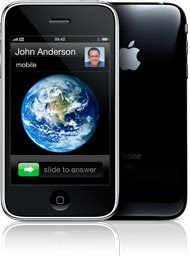
The Phone You've Been Waiting For?

It's pay as you go (PAYG), only available on one network (O2) and will set you back a cool £342.50 for the basic (8GB) handset or £391.45 for the top of the range (16GB) model.

Apparently it's the phone we've all been waiting for.

Yes folks, Apple's iPhone is now available on a pay as you go tariff, and it includes the surprisingly generous offer of unlimited web browsing and Wi-Fi for 12 months (subject to fair usage).


I'm impressed but the data offer but the handset cost is outrageous considering the UK market offer subsidised handsets (with contracts), many of which do a good job of surfing the web, playing music, with a better camera and physical screen (jury is still out as to whether a touch-screen is preferred by Joe Public).

Click here for the Apple store page, and here for O2 T&C.

The Ambiguity Of Surveying

Moneysupermarket has claimed that less than 25% of British consumers with an internet-enabled handset "actually make(s) use of mobile internet services".

What an incredibly ambigous survey!

How do you define whether someone is actually making use a service, it's 100% contextual and based upon the person finding it useful. For someone that might mean access to Facebook (which can be done easily on most handsets), for others usage of mapping software (good user experience dependent on handset & network) or simply getting football scores (easy for everyone, even just WAP).

- Yes, the ownership of smartphones and feature-rich phone is rising.
- Yes, the average consumer is yet to realise the full potential of their handset.
- Yes, there is a problem with the transparency of billing as customers have difficulty quantifing mobile internet services, particularly compared to calls/texts.

- BUT, this survey is misleading to say that people are struggling to use new services despite all the hype and investment. In fact, I would say the opposite is true and people are finding new ways to use their phones everyday. Innovative new phones, more marketing than ever before and increased interest in technology in the media are behind the increase (alas I have no stats to back me up here).

They say you can prove anything with stats but I do wonder where they got the data for this one.

Faking It In Myanmar

This BBC story on fake goods today made me smile fresh from returning from a adminstrative trip to Burma, aka Myanmar, for my work permit. Bear with me whilst I explain...

Once you pass through the border check-point to the other side (of the road) you are greeted with the standard fanfare of taxi drivers, tour guides and generally dodgey folk that frequent red hot tourist areas.

After brushing off the tour guides ("I'm here an hour purely for visa administration purposes and they have my passport so no temple trip please") we headed down to the market, me in anticipation of some authentic Burmese culture and the missus complaining about the potential for authentic Burmese culture (the two countries aren't exactly too pally, but more on that later).

The market was quite frankly an incredibly depressing place. The fact that it was visited by tourists who are killing time in between updating their visa makes the place somewhat souless, like a pub that exists within a train station but on a whole new level. The markets were literally crammed with beggars and fake goods: phones, watches, games consoles, cigerettes, clothes, bags, anything you can imagine.

Being a bit of a geek I couldn't resits perusing the 'Sumsung' devices, and tested a fake Omnia and an incredibly fake iPhone. My favourite item was most definitely the Super Poly 64 Station billed "The Amazing Game Machine", so already setting pretty high expectations.

So how does the market fare in relation to the sound advice on fake goods issued from HM Revenue & Customs (HMRC)?

- "Buy from a reputable or regulated site"


Definitely a failure on this count, no Ian Beale style market inspector present


- "If purchasing from outside the UK or a new website research the site, check all the facts before you buy"

Not entirely sure how you can 'check all the facts' as many shopkeeps no speaky English, and I doubt they have all the facts to hand for the Super Poly 64 Station, alas.

- "When a deal looks to good to be true it often is"

When are items are blindingly fake they often go from being acutely undesireable to incredibly collectable. I'd love to have bought a 'Sumsung' but I frankly doubt it would work properly and didn't want to waste my money.

Fake goods in the UK are almost as easy to spot as those at Myanmar market so I have little sympathy for those who purchase them and keep the industry going.

And they may even fund Terrorism (note the capitalisation for addition emphasis)...that's final nail in the coffin then and is sure to make Mummy think twice about buying Little Johnny that fake DS, it's ok that might be faulty, combustable and dangerous but if it funds terrorism then it's definitely off the Xmas list.
Do we need to use terrorism as scaremongery for everything in life? I'd like to see the statistics that link the two together...not likely as they have only said it "could" fund terrorism.
Monday, 1 December 2008

Now that's an awful lotta people

This article from The Nation today...

"Tourism Minister Weerasak Kowsurat said the number of stranded tourists have risen to 240,000."

In true Match Of The Day (MOTD) style, that's 240,000 (two hundred and forty thousand).

UPDATE: it's been confirmed that the PAD has ceased its occupation of Government House in Bangkok, it is believed to be mobilising all supporters to concerntrate on its efforts to gather at either Don Muang or Suvarnabhumi airports.

Full story

Thailand: world's top 20 most dangerous places?

The Telegraph has included Thailand in an article on "20 places which are among the most dangerous places to visit on Earth" [what a poorly written phrase], full entry for Thailand below.

Thailand
Major political demonstrations and a temporary state of emergency have affected both of Bangkok’s airports. The area around Government House and nearby Ratchadamnoen “Nok” Road, including the area around Metropolitan Police headquarters and Parliament should be avoided. Fighting also broke out last month on the Cambodian border at Preah Vihear and tensions remain high. Civil unrest and frequent attacks continue in the southern provinces of Pattani, Yala, Narathiwat and Songkhla – the Foreign Office advises against all but essential travel to these areas.


So Thailand apparently enjoys a peer group which includes Iraq, Afghanistan, Burundi, The Congo, Zimbabwe, Lebanon...I could go on...

Thailand is no where near comparable to these places, the article is incredibly misleading. I am fully against the PAD but there is no immediate danger to tourists, assuming none try to tackle the situation directly. The problem, read 'danger', lies in the uncertainty behind the airport closes - it could be open tomorrow, or could stay closed for 2008...nobody knows.

The situation is now a stalemate between the Prime Minister, who cannot be seen to give in to the demands of the mob, and a (minority) mob that truly has nothing to lose and is hell-bent one thing alone - forcing the PM to resign.

With my Western hat on it seems impossible that this will go on any longer, but I'm quickly learning that Thailand is a law unto itself. Stranded tourists are finding ways to get out and get home but in defusing the situation it may become sustainable and longterm, causing Thailand to suffer massively (BoT has predicted a 40% drop in tourism should the airports now open until next year).

With the armed forces and police refusing to move in (the protestors are made up of families, with many women and children - see here for more) the immediate future is unclear but the damage to Thailand's tourism reputation continues to show no sign of abating.

Hat tip to The BANGKOK BUGLE for the article and taking the obvious headline.